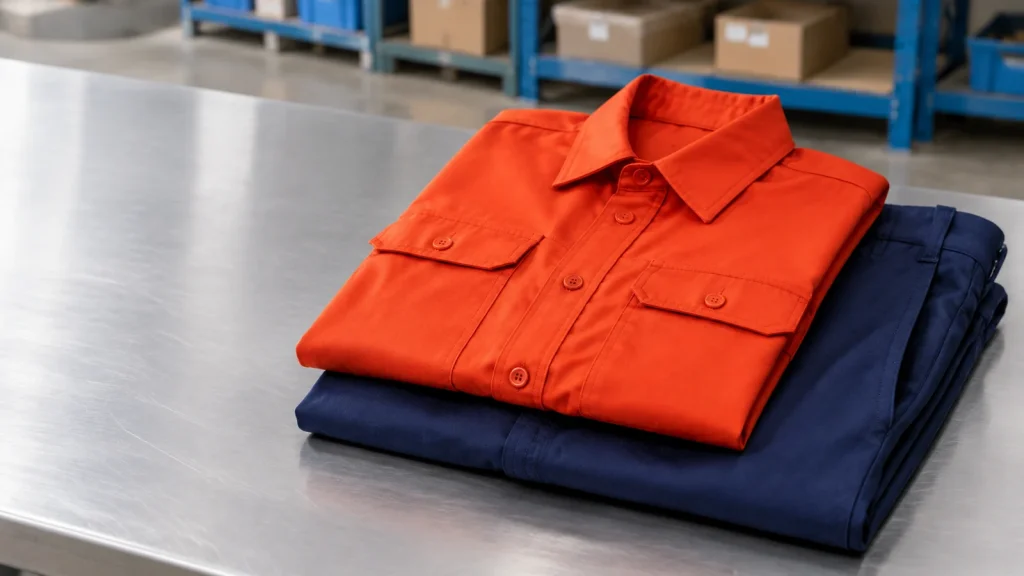
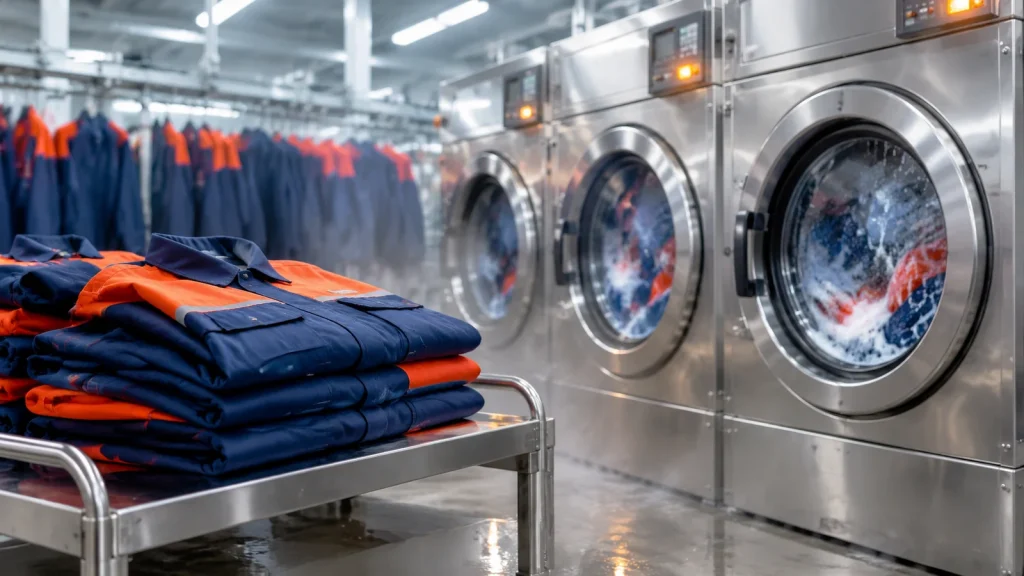
Most antistatic workwear is bought on a number measured before the first wash. That number is close to meaningless: the garment will spend its working life in a laundry, and what matters is what remains after thirty cycles.
Why the Figure on the Box Is Not the Specification
Antistatic fabric is made two ways. A topical finish applies conductive agents to the surface — cheap, immediate, and gone after ten to twenty industrial washes. Structural incorporation spins conductive filament into the yarn, so the dissipation path runs through the fibre rather than sitting on top of it.
The garment looks and feels identical either way. The wearer cannot tell, and the resistance climbs silently until the clothing stops dissipating charge at all.
Only the second approach survives two years of weekly washing. The first is a sample result, not a specification.
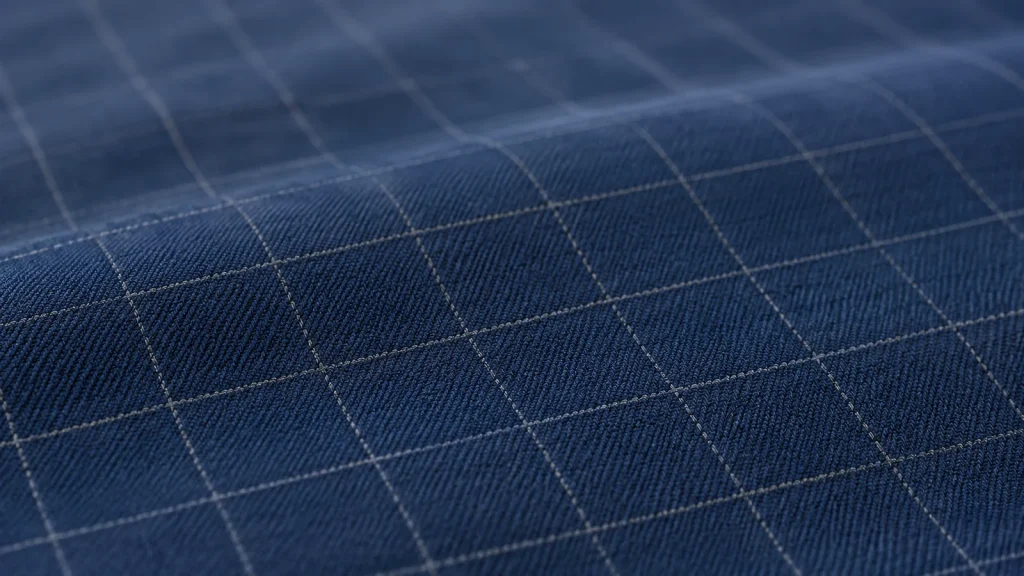
What GB 12014-2019 Grade A Measures
- Point-to-point resistance of the fabric, in ohms
- Charge on the finished garment, in microcoulombs
- Performance after laundering — the figure most buyers skip
- Mechanical strength, because a torn garment is no longer a barrier
Grade A sits in the 10⁵ to 10⁷ ohm band: low enough to dissipate, high enough not to create a discharge path of its own.
The Wash Figure Is the Real Specification
A new garment reading 10⁶ ohms proves the fabric was made correctly. The same reading after 33 industrial washes proves the construction holds.
Our antistatic summer workwear is specified at 1×10⁵–10⁷ ohm, Grade A under GB 12014-2019, with charge remaining below 0.2 μC after 33 washes.
Two mechanical figures carry equal weight: warp breaking strength of at least 960 N against a 900 N national standard requirement, and dimensional change within ±1.8% after five washes. A garment that shrinks or tears is replaced long before its antistatic life is used up.
GB 12014-2019 and EN 1149-5: Different Tests, Different Evidence
Both standards address static control, but they do not measure the same parameters, so a figure from one does not convert into the other. The practical question for a buyer is not which standard is stricter, but which parameter your specification actually names.
| GB 12014-2019 | EN 1149-5 | |
|---|---|---|
| Scope | Chinese national standard, antistatic clothing | European standard, electrostatic properties |
| Measure | Point-to-point resistance, garment charge | Surface and vertical resistance, charge decay |
| Grading | Grade A and Grade B | No A/B grading |
| Laundering | Specified wash cycles before retest | Specified cleaning cycles before retest |
So a tender that specifies point-to-point resistance and garment charge is evidenced by GB 12014-2019 results; a tender that specifies surface resistance and charge decay is evidenced by EN 1149-5 results. Send the parameter list with your enquiry and we will confirm, per model, which of those parameters its test report documents, and supply the report page for the model and size you order.
Antistatic Clothing Is Not Flame Retardant
Antistatic fabric controls static charge. It does not resist ignition, does not self-extinguish, and does not protect against flash fire or arc — polyester antistatic fabric will melt and drip. Where flash fire is a hazard, a separate flame-retardant garment to GB 8965.1 or EN ISO 11612 is required, and antistatic clothing must never be offered as a substitute.
Nor is it grounding. The garment dissipates charge from the wearer; it does not earth the wearer. Footwear, flooring and bonding practice complete the path.
Examples From Our Antistatic Line
| Item | Key specification |
|---|---|
| Antistatic summer workwear | Grade A, 1×10⁵–10⁷ Ω, <0.2 μC after 33 washes, 155 g/m² combed cotton |
| Pipeline summer suit | Same electrical performance, orange-red for crew identification |
| Pipeline spring/autumn suit | Same, warp strength ≥960 N, ±1.8% after 5 washes |
| Antistatic rainwear | GB 12014-2019, ≥100 kPa new / ≥80 kPa after 20 washes, ≥4500 g/(m²·d) breathability, ≥800 N |
| Antistatic base layer | 5% conductive fibre, 10% elastane, 600 g (XL) |
Grade A under GB 12014-2019 applies to the three suit items listed above. For the base layer and rainwear, and for any other style in the line, confirm the grade and the electrical parameters against that model’s own report when you enquire. None of these items are flame retardant.
Antistatic Workwear: FAQ
Is antistatic clothing the same as ESD clothing?
No. Antistatic controls charge build-up on the wearer; ESD clothing is held to a tighter resistance range for electronics manufacturing. Different specifications for different hazards.
Can it be washed normally?
No fabric softener, no chlorine bleach, no high-temperature drying. Industrial laundering is acceptable when the cycle is specified.
Why do two suppliers quote the same ohm value at very different prices?
Usually one figure is as-new and the other is post-wash. Ask which one is being quoted.
Sources
- EN 1149-5, Protective clothing — Electrostatic properties
- HSE, Electrostatic ignition hazards in the workplace
Specifying antistatic workwear for a petrochemical site? Send the required standard, resistance band, wash cycle, fabric weight and size split, and we will quote against the laundered figures rather than the as-new ones.