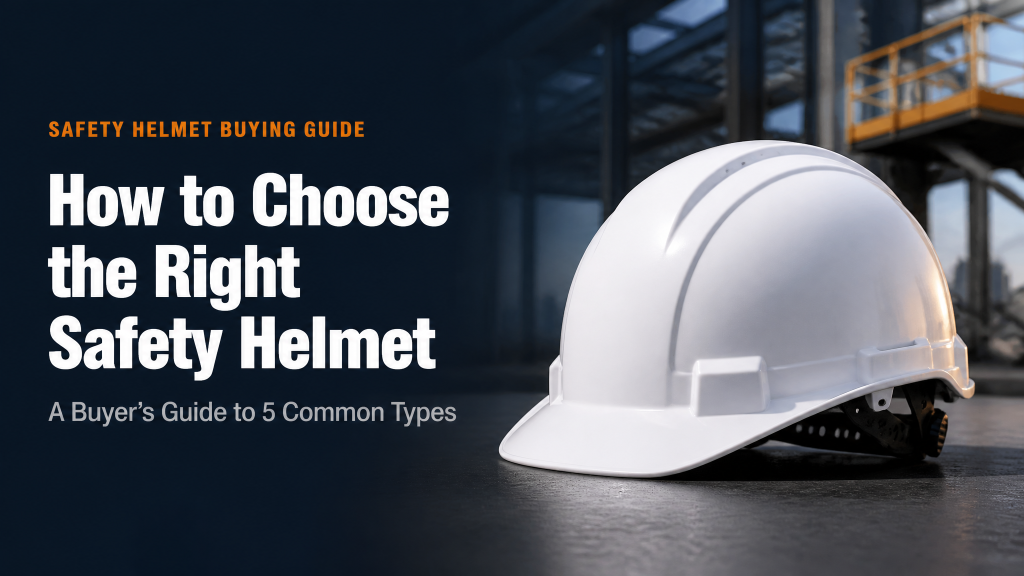
Primary keywords: how to choose a safety helmet, hard hat buying guide, construction hard hats, electrical safety helmet, industrial safety helmet
Choosing a safety helmet is not simply a matter of selecting a color or a low price. A properly selected helmet is part of a worker’s personal protective equipment (PPE) system and should match the hazards of the job, the applicable safety standard, and the individual wearer. Construction sites, electrical maintenance areas, manufacturing plants, forests, and elevated work locations do not present the same risks. The best safety helmet is therefore the one designed, tested, and fitted for the actual task.
This hard hat buying guide explains the five most common safety helmet categories and the key factors to check before purchasing for a team, a project, or an industrial PPE program.
1. Construction Hard Hats
Construction hard hats are the most widely used type of industrial head protection. They are intended for common jobsite hazards such as falling tools, overhead materials, and contact with fixed objects. For normal construction work, buyers should first confirm the required regional standard and the helmet’s impact classification. In North American applications, Type I helmets are designed primarily for top impact protection, while Type II helmets are designed to provide additional protection against impacts from the side as well as the top.
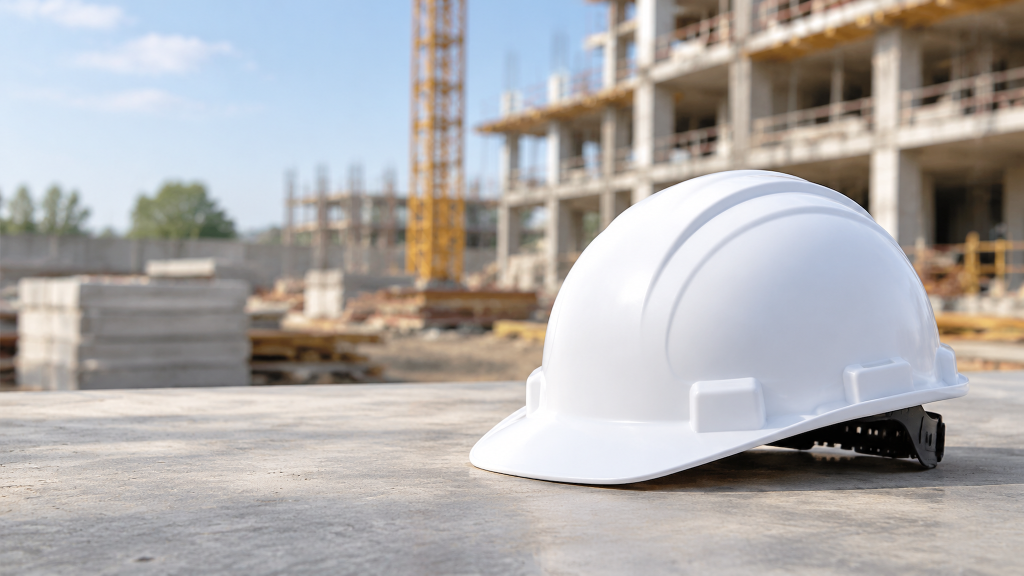
A construction helmet should have a durable shell, a reliable suspension system, and an adjustable chin strap when the work environment requires secure retention. Check that the shell is free from unnecessary holes, cracks, or modifications. A comfortable suspension is important because it creates clearance between the shell and the wearer’s head, helping the system manage impact energy. For crews working outdoors, consider options with UV-resistant materials, sweatbands, and accessories such as visors or neck shades—provided that the accessories are compatible with the helmet model.
2. Electrical Safety Helmets
Electrical safety helmets are used where workers may be exposed to energized equipment or electrical conductors. They must be selected very carefully because a helmet that is suitable for impact protection is not automatically suitable for electrical work. In the United States, electrical helmet classes commonly include Class G (General), Class E (Electrical), and Class C (Conductive). Class G and Class E helmets are designed for electrical protection under their relevant classifications, while Class C helmets do not provide electrical insulation.
Before buying an electrical safety helmet, identify the voltage exposure and site requirements, then verify the class shown in the permanent product marking. Avoid metal components, conductive accessories, or unauthorized modifications that could compromise electrical performance. Ventilation can improve comfort, but ventilated helmet designs may not be appropriate for electrical hazards unless the manufacturer specifically states that the model meets the required electrical classification. Electrical PPE should always be selected as part of a complete risk assessment, not as a stand-alone item.
3. Type II Industrial Safety Helmets
Type II industrial safety helmets are a strong choice for workplaces where side impacts, slips, and movement around structures are realistic concerns. They are often considered for construction, utilities, manufacturing, warehousing, and maintenance work where a worker may strike the side of the head against beams, equipment, or scaffolding.
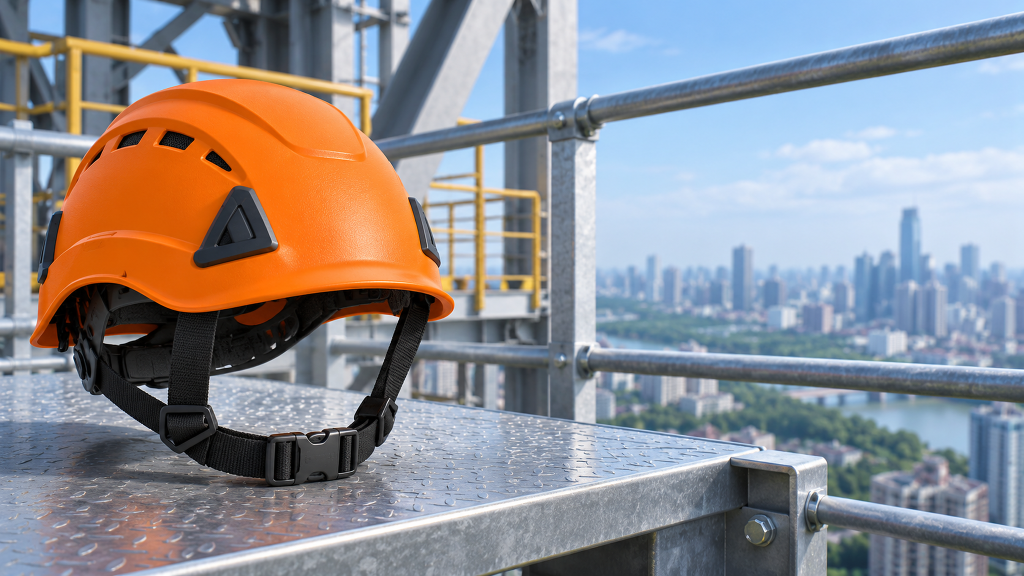
Many modern Type II designs use an integrated chin strap and internal padding to improve stability and comfort. When comparing models, examine the retention system, adjustment range, accessory slots, and compatibility with eye protection, hearing protection, respirators, or face shields. A helmet that conflicts with other PPE is less likely to be worn correctly. Buyers should also confirm whether the helmet is intended for the local market and complies with the standard requested by the customer, contractor, or safety manager.
4. Forestry Safety Helmets
Forestry safety helmets are designed for demanding outdoor tasks such as tree cutting, landscaping, brush clearing, and chainsaw work. They are often supplied as a complete head, face, and hearing protection assembly. A typical forestry helmet may include a hard shell, mesh or clear face shield, and earmuffs.
When choosing this type, make sure every component is suitable for the planned activity. A face screen can help shield the face from wood chips and debris, but it is not a substitute for safety eyewear where eye protection is required. The earmuffs should offer protection appropriate to the noise level, and replacement parts should be available for routine maintenance. Look for a balanced design that remains comfortable during long outdoor shifts, especially in hot or wet conditions.
5. Safety Helmets for Work at Height
Workers on ladders, platforms, towers, roofs, and other elevated locations need helmets with dependable retention. A secure chin strap helps keep the helmet in position if the worker bends, climbs, or falls. However, a climbing-style appearance alone does not prove that a helmet is suitable for industrial work. Always confirm that the product is certified or marked for the required workplace application and impact protection.
For work-at-height projects, evaluate the chin strap’s adjustment, buckle strength, and release function, along with the helmet’s compatibility with fall-arrest equipment. A low-profile shell can improve mobility in confined spaces, while a well-designed suspension can reduce pressure points during extended use.
Final Buying Checklist
Before placing an order, confirm the work hazards, local standard, impact type, and electrical requirements. Inspect permanent markings, manufacturer instructions, date of manufacture, size range, suspension quality, and accessory compatibility. Ask about traceability, replacement parts, packaging, and inspection guidance. Finally, arrange fit testing with representative users whenever possible. The right safety helmet should be compliant, comfortable, correctly fitted, and appropriate for the exact work environment—not merely the lowest-cost option.
Safety note: This article provides general product-selection information. Employers and users should follow applicable local regulations, site rules, manufacturer instructions, and their formal hazard assessment when selecting PPE.